
Chained Beasts Afflictions: How Injuries, Potions and Healing Trade-Offs Work
✓ Last verified 2026-10-16 · How we check facts
Quick answer
Chained Beasts afflictions are lasting penalties you accept when you heal or train between arena fights. Healing is a real decision because stronger potions bring heavier side effects that stay with you for the rest of the run.
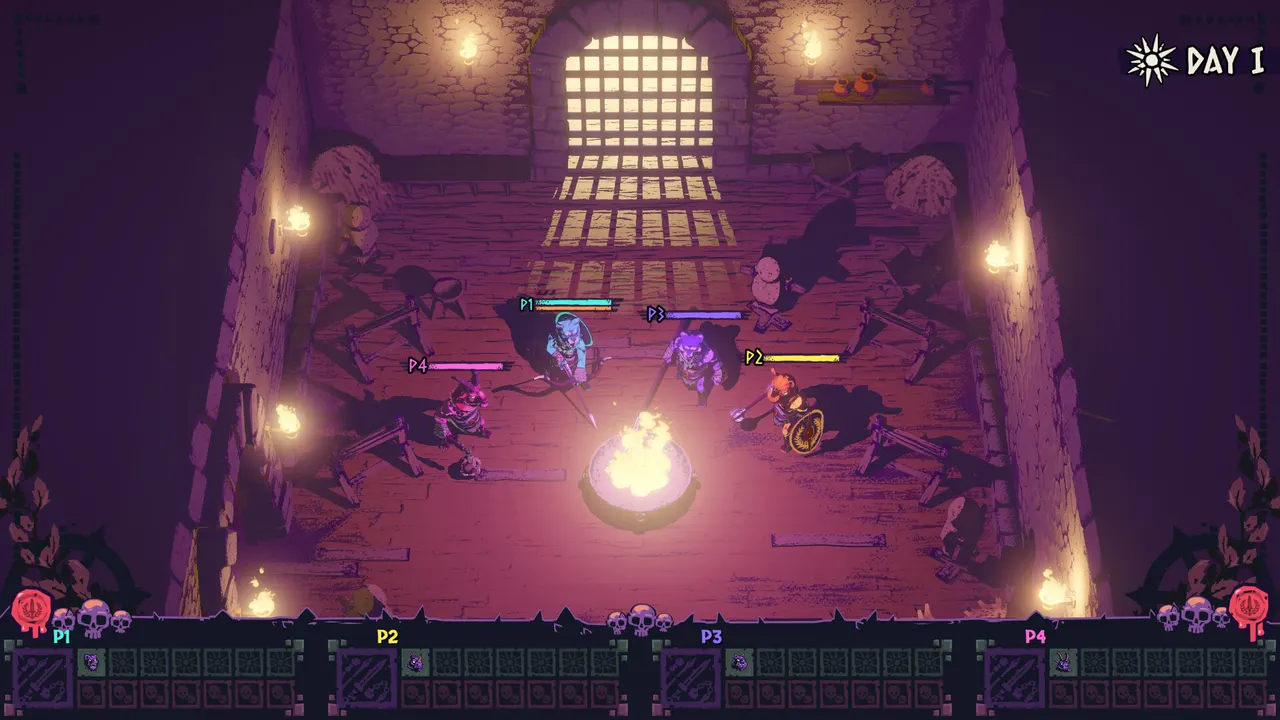
Chained Beasts afflictions are the system that turns every trip to the healer into a decision. After a fight you can restore health, but the better the potion, the worse the side effect you carry into the next arena. This guide explains how Chained Beasts afflictions work, which examples reviewers and players have described, and how to build a run that treats them as a resource rather than a punishment.
What Chained Beasts Afflictions Are
In most roguelikes, a run gets easier the longer you play because power stacks up. Chained Beasts bends that curve. Your gladiators pick up injuries and conditions as the run goes on, and those conditions are called afflictions. They are the main reason a character can look broken on the status screen yet still hit like a truck.
The developer's launch announcement lists 70+ afflictions in the full game. They arrive from three main places: healing potions, training and surgery. None of them are random bad luck in the sense of a trap you cannot read. Each one is tied to a choice you make between fights, which is why reviewers keep calling it the best idea in the game.
| Source | What you get | What it costs |
|---|---|---|
| Healing potion | Health back before the next fight | An affliction that scales with potion strength |
| Training | A level up and new perk | A chance of another negative effect if you push your luck |
| Surgery | Bigger upgrades later in the run | Changes how harsh later potions become |
How Healing Works Between Fights
Health carries over from fight to fight, so damage is persistent. After an arena you visit a healer who offers a short list of potions, from a small top-up to a full heal. The catch is that every potion comes with an affliction, and the more it heals, the heavier the penalty. Reviewers describe the potions as levelled by a skull rating, with the strongest options being the most crippling.
In co-op the potion pool is shared. Everyone chooses from the same limited set and only one player can claim each potion, so the team has to decide who needs health most and whose build can best absorb the downside. Knocked-out players come back at 1 HP after a fight as long as one gladiator survives, which makes the healer visit unavoidable rather than optional.
Affliction Examples Players Describe
The full list of Chained Beasts afflictions is long, and the game does not need you to memorize it. These are the examples reviewers and preview players have actually mentioned, which show the range of effects.
| Affliction effect | What happens | Who feels it |
|---|---|---|
| Shorter dodge roll | Your dodge covers less distance | Anyone who relies on evasion |
| Nearsightedness | Vision blurs or blacks out outside a narrow cone | The affected player's screen |
| Hallucinations | You see enemies that are not really there | Whole team in a boss fight |
| Lost eye | Half of the screen goes black | The affected player |
| Obscured vision near corpses | Vision clouds around bodies | Melee fighters in crowds |
| Getting winded | You tire quickly from running | Aggressive players |
| Dropped weapons | Broken fingers make you fumble gear | Weapon swappers |
Some of these look like pure punishment, but they interact with builds. A nearsighted gladiator who still lands a heavy hit is a classic example from one reviewer's group: he could barely see, yet every connected strike was close to a one-tap kill.
Training, Surgery and Pushing Your Luck
Healing is not the only place afflictions appear. Training works the same way as potions: pushing your luck too far can leave you with another negative effect in exchange for a level up. On higher difficulties the trainer asks you to earn your level ups through a workout system instead of getting them for free, so risk is built into progression itself.
Surgery arrives later in an act and offers more substantial upgrades. Reviewers describe an almost darkly funny trade: you can sell a body part for gold that goes into the shared pot, but it makes future potions more punishing, while certain replacements make potions easier to handle. Treat surgery as a long-term plan, not a heal button.
Building Around Chained Beasts Afflictions
The strongest idea in the system is that some upgrades gain value from having more afflictions, while others remove or offset them. That creates two broad plans.
| Plan | How it works | Best for |
|---|---|---|
| Embrace afflictions | Stack bonuses that scale with the number of conditions | Players who enjoy high risk and high output |
| Offset afflictions | Pick perks that remove or reduce negative effects | Players who want a stable run in solo |
A few practical habits help in either plan:
- Decide before the fight which potion you are willing to take, so you are not choosing under pressure.
- Match the affliction to the player. A vision penalty hurts a ranged fighter more than a heavy melee build that stays close.
- Talk about hallucinations before a boss fight, because fake enemies waste attacks and attention.
- Remember that crowd performance affects your gold, so you can afford better options if you play with variety rather than repeating the safest move.
Why Afflictions Keep Runs Fresh
Because every heal costs something, no two runs end up identical. One team might end a run covered in conditions yet immensely strong, while another plays cleanly and relies on surgery. Reviewers highlight that this inversion of the usual power ramp prevents the late game from becoming boring, since bosses stay dangerous without turning into health sponges.
It also makes the game feel personal. Your character gains quirks and weaknesses, and those quirks become the story of the run. For a team, that means shouting about whose eyesight is gone and whose turn it is to take the next penalty, which is half the fun of the co-op. For a deeper look at how the shared chain complicates all of this, see our Chained Beasts coop guide, and for where you can play it, see the platform overview.
Reading the Crowd and Your Gold
Money matters because it decides how many potions, items and upgrades you can afford. The crowd scores each fight, so repeating one safe attack earns less than mixing weapons, executions and environmental kills. That means a team with plenty of afflictions can still stay healthy by performing well, since gold buys relief. Think of Chained Beasts afflictions and crowd favour as two sides of the same economy: you trade comfort for power, then trade showmanship for the means to survive it.
Solo Versus Co-Op
Afflictions work in single player, but reviewers agree the game is designed to be most fun with friends. In solo, the chain anchors you to the arena or to heavy objects, and afflictions can feel harsher because there is nobody to share the burden. In co-op, the shared potion pool and swapping perks give the team a negotiation layer that solo play lacks.
If you play alone, lean toward the offset plan and save strong potions for boss fights. If you play with a group, spread afflictions around so no one build collapses under the weight.
Where to Check Official Details
The most reliable place to confirm game details is the official Chained Beasts Steam page, which lists the current feature set, languages and requirements. The developer's own announcements are the source for counts such as the number of afflictions, so check them if numbers change after patches.
Frequently Asked Questions
Q: What are Chained Beasts afflictions?
Chained Beasts afflictions are lasting negative effects that come from healing potions, training and surgery. They stay with your gladiator for the rest of the run and can change vision, movement, combat and decision making.
Q: Can you avoid Chained Beasts afflictions completely?
Not realistically. Healing normally comes with a downside, so the choice is between taking a smaller penalty now or risking a worse situation in the next fight. Some perks remove or offset conditions, but the system is designed so that you manage afflictions rather than avoid them.
Q: How many afflictions are in Chained Beasts?
The developer's launch announcement lists 70+ afflictions in the full release. Individual numbers may change with updates, so treat the figure as a launch-day count.
Q: Are afflictions worse in co-op or solo?
They are different. In co-op the team shares potion choices and can swap perks, which spreads the burden. In solo you carry every penalty yourself, so planning matters more.
Related Guides
Up next →
Chained Beasts Characters and Classes: All Beasts, Starting Perks, Variants and Best Picks
Chained Beasts characters explained: the 8 unlockable beasts, known starting perks for Rhino, Wolf, Lion and Lioness, variants, and why there are no fixed classes.
Gameplay
Chained Beasts gameplay explained: chained co-op combat, weapons and throws, crowd scoring, potions and afflictions, trainer, merchant, surgeon and the 3-act run.
Beginner Guide
Chained Beasts guide for beginners: controls, how to survive your first run, using the chain to trip enemies, healing smartly, earning crowd gold and picking a beast.
Hard Mode
Chained Beasts hard mode explained: the 10 difficulty levels, how Pleb and Legionnaire unlock, what each step adds and tips for half-health starts.